
Booking a private guided tour for a corporate team building event in Los Angeles requires selecting a licensed local operator, defining your group size and goals, and securing a customized itinerary. This guide covers how to evaluate providers, verify credentials, understand pricing structures, and navigate the specific logistics of the Los Angeles market to ensure a successful offsite experience.
How to Choose a Provider
Choosing the right tour operator is the most critical step in planning a corporate offsite. A private guided tour is a customized experience where a dedicated guide leads a single group through a specific itinerary, ensuring that the pace and content align with your company's objectives. You must distinguish between generic sightseeing companies and specialized corporate event planners. Look for operators who explicitly list corporate team building as a core service rather than a secondary offering. Another Side of Los Angeles Tours, for example, focuses heavily on corporate group activities and private tours, which indicates a dedicated infrastructure for handling business clients. Check their portfolio to see if they have experience with your specific industry or group size. A provider that only handles small tourist groups may lack the logistical capacity to manage a 50-person corporate team with dietary restrictions and specific learning goals.
What to Ask Before Committing
Before signing a contract, you need to ask specific questions that reveal the depth of the provider's planning capabilities. Do not settle for vague answers about "fun activities." Ask about the guide's background in corporate facilitation. Inquire about the ratio of guides to participants, especially for larger groups. You should also ask about the flexibility of the itinerary. Can the route be adjusted if the weather changes or if the group's energy levels drop? Furthermore, ask about the equipment provided. If the tour involves Segways or e-bikes, ask about the training duration and the safety protocols in place. These questions help you gauge whether the provider is a true partner in your team building strategy or just a transportation service.
How to Verify Credentials
Verifying the legitimacy of a tour company is essential for risk management. A licensed tour operator is a business that holds the necessary permits from local authorities to conduct commercial tours in specific zones. In Los Angeles, certain areas require special permits for commercial vehicles or guided groups. Check if the company is bonded and insured. Liability insurance is a non-negotiable requirement for corporate events. You can verify this by asking for a Certificate of Insurance (COI) that names your company as an additional insured party. Additionally, check online review platforms like TripAdvisor and Yelp for recent feedback from other corporate clients. Look for reviews that mention punctuality, guide knowledge, and professionalism. If a company cannot provide proof of insurance or has a history of negative reviews regarding safety, walk away.
How the Booking Process Works
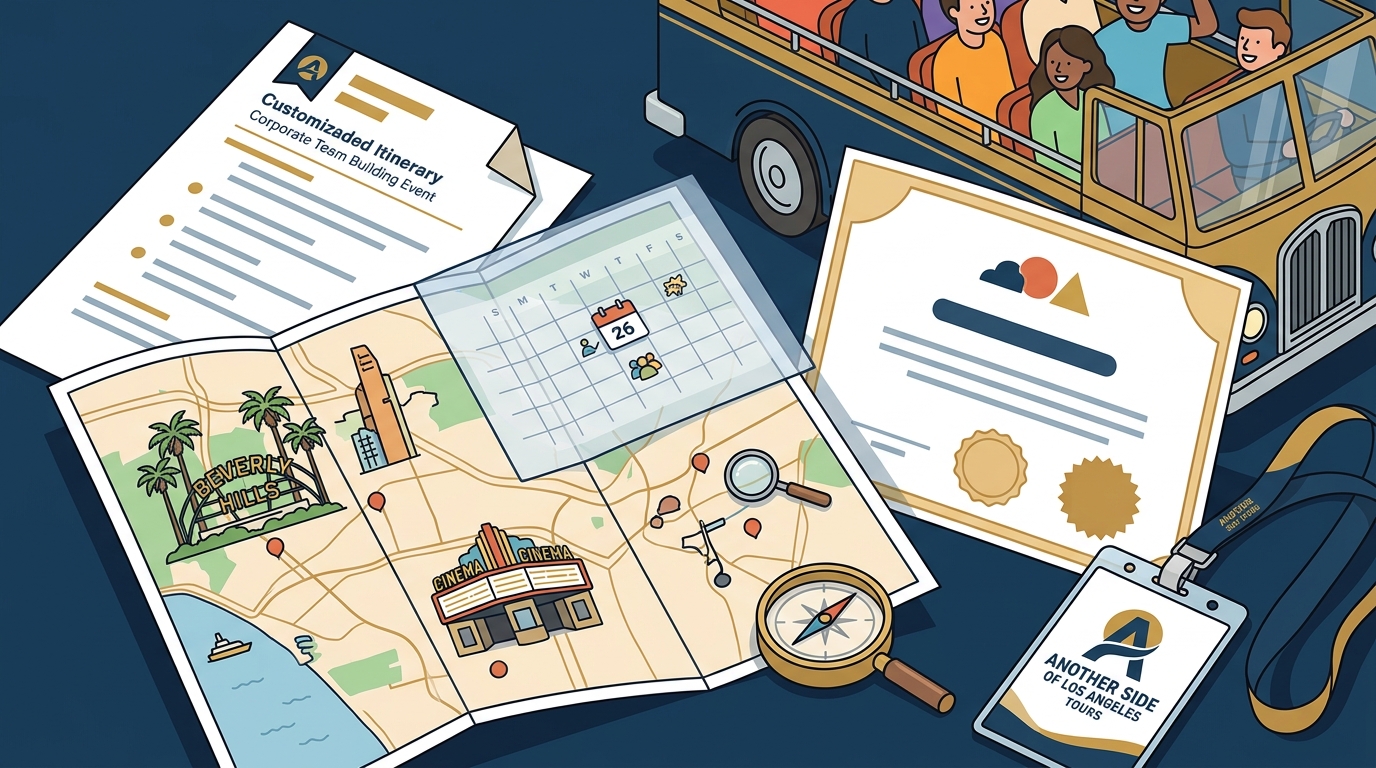
Understanding the workflow helps you manage expectations and deadlines. The process typically begins with a consultation where you outline your goals, group size, and budget. The provider then proposes a customized itinerary. After you approve the plan, you sign a service agreement and pay a deposit to secure the date. The final payment is usually due 30 to 60 days before the event. On the day of the event, the guide and any necessary equipment will be at the designated meeting point. It is important to confirm the meeting point and time at least 48 hours in advance. This structured process ensures that all logistical details are handled before the team arrives.
What It Costs
Common Mistakes to Avoid
Many corporate events fail due to avoidable planning errors. The most common mistake is booking too late. Popular dates, especially on Fridays and weekends, fill up quickly. Another error is underestimating the group size. If you book for 20 people and 25 show up, you may face capacity issues or additional charges. You should also avoid choosing an activity that does not align with your team's physical capabilities. Not everyone is comfortable on a Segway or an e-bike. Finally, do not skip the pre-event briefing. Ensure that all participants know what to wear and what to bring. These small oversights can derail an otherwise perfect event.
Versus Alternatives
Private guided tours offer distinct advantages over other team building options. Compared to offsite retreats in remote locations, city tours are more accessible and often less expensive. They allow employees to stay in the city, reducing travel time and accommodation costs. Compared to in-house workshops, tours provide a change of environment that can break down social barriers. Employees who rarely interact outside of work settings often find it easier to connect in a new, engaging environment. However, tours are less effective for deep strategic planning. They are best used for relationship building and morale boosting rather than complex problem-solving exercises.
For Specific Situations
The ideal tour format depends on your specific corporate situation. For a large group of 50 or more, you may need to split into smaller subgroups with multiple guides to ensure everyone gets attention. For a small executive team, a VIP limo tour or a private dining experience might be more appropriate. If your team is new and needs to bond, an active tour like a hiking or e-bike ride can be very effective. If your team is experienced and needs a reward, a luxury tour focusing on celebrity homes or fine dining might be better. Tailoring the experience to the team's current dynamic is key to maximizing the impact of the event.
Rules and Protections
Local Specifics
Timing Your Booking
Timing is crucial for securing the best experience. You should book your tour at least 3 to 6 months in advance, especially for peak seasons like spring and fall. Booking early gives you more options for dates and times. It also allows the provider more time to customize the itinerary to your specific needs. If you are planning a last-minute event, you may have limited options and may have to accept a standard itinerary rather than a fully customized one. Always confirm the date as soon as possible to lock in your reservation.
Results Over Time
The benefits of a well-executed team building tour extend beyond the day of the event. Teams that participate in shared experiences often report improved communication and trust in the weeks following the event. The shared memories created during the tour serve as a reference point for future interactions. Employees who bonded during a fun, low-stress activity are more likely to collaborate effectively on challenging projects later. Over time, regular team building activities can foster a positive company culture and reduce turnover. The investment in a private guided tour is an investment in your human capital.
Key Takeaways
- Choose a provider with specific experience in corporate team building, not just general sightseeing.
- Verify that the company is licensed, bonded, and carries adequate liability insurance.
- Ask specific questions about guide qualifications, equipment safety, and itinerary flexibility.
- Book 3 to 6 months in advance to secure your preferred date and allow time for customization.
- Understand the pricing structure, including any hidden fees for equipment or entry fees.
- Review the cancellation policy and liability waivers carefully before signing the contract.
- Tailor the tour format to your team's size, physical capabilities, and current dynamic.
- Use the tour as a tool for relationship building and morale boosting, not for deep strategic planning.
Frequently Asked Questions
How far in advance should I book a corporate tour in Los Angeles?
It is recommended to book at least 3 to 6 months in advance, especially for peak seasons. This ensures you have the best options for dates and allows time for customization.
What is the maximum group size for a private tour?
Group sizes vary by provider and activity. For Segway or e-bike tours, groups are often limited to 20-30 people to ensure safety and quality. For walking or limo tours, larger groups can be accommodated by splitting into subgroups.
Do I need to provide food and drinks for the tour?
What happens if it rains on the day of the tour?
Most providers have a rain policy. They may offer to reschedule the tour or modify the itinerary to include indoor stops. Check the specific weather policy with your provider before booking.
Can I customize the itinerary to include specific locations?
Yes, private tours are highly customizable. You can request specific stops, such as celebrity homes, museums, or restaurants, as long as they fit within the tour duration and logistics.
Is a private tour more expensive than a group tour?
Yes, private tours are more expensive per person than shared group tours. However, you get a dedicated guide, a customized itinerary, and the flexibility to adjust the pace and content to your team's needs.