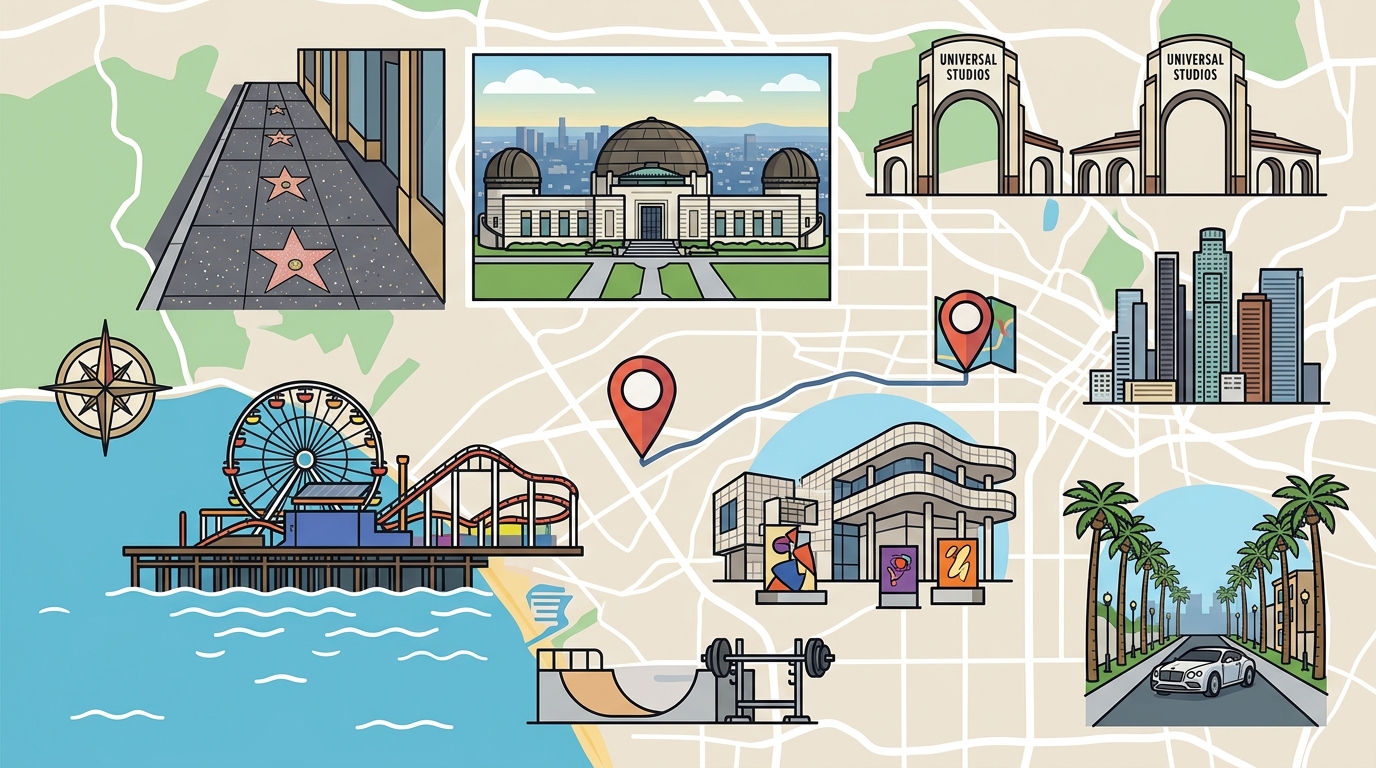
First-time visitors to Los Angeles should prioritize the Hollywood Walk of Fame, Griffith Observatory, Santa Monica Pier, and the Getty Center. These four sites capture the city's core identity: entertainment history, panoramic views, coastal culture, and world-class art. This guide covers eight essential stops, including Universal Studios, Downtown LA, Beverly Hills, and Venice Beach, to help you build a realistic itinerary. Another Side of Los Angeles Tours provides expert-led experiences that connect these locations with local context and efficient routing.
Griffith Observatory
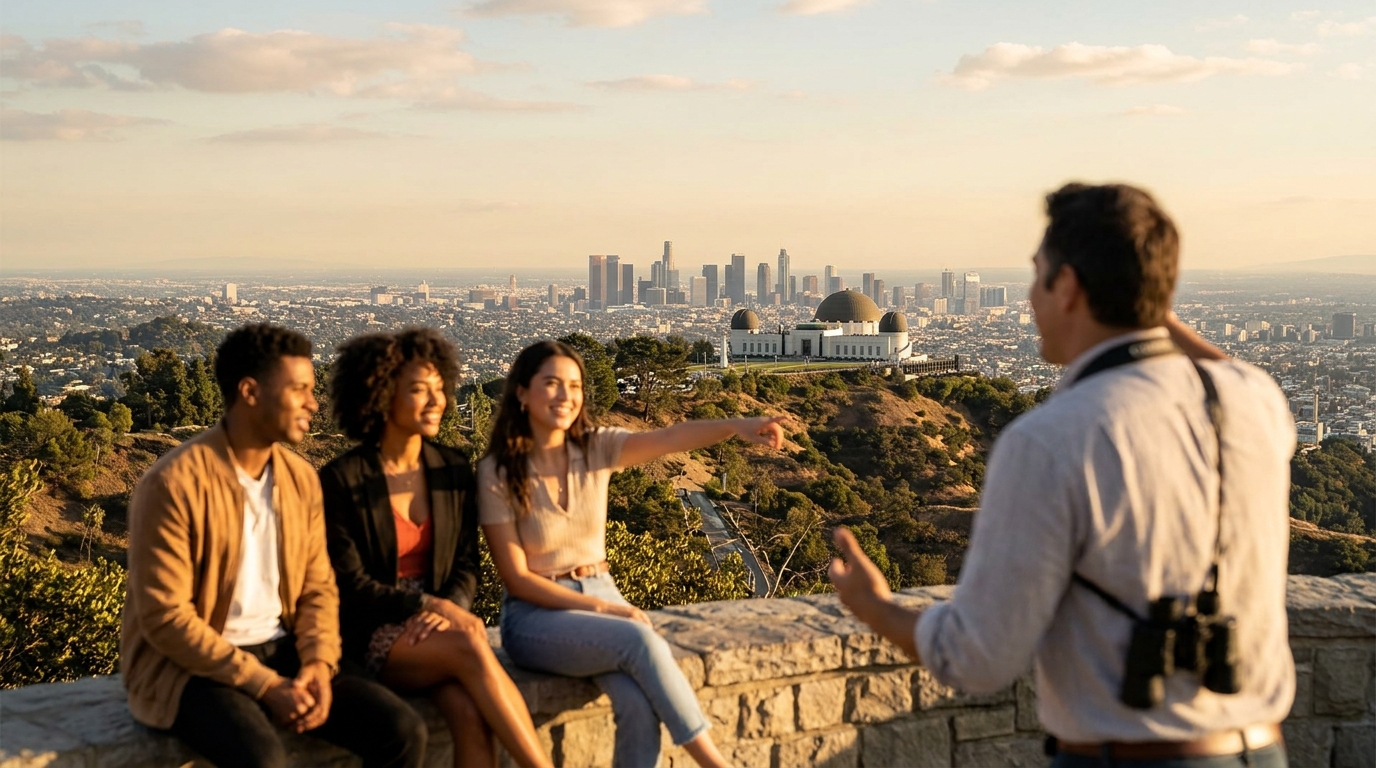
Griffith Observatory is the most popular free attraction in Los Angeles, offering sweeping views of the Hollywood Sign and the city skyline. Located in Griffith Park, the facility features planetarium shows, science exhibits, and open-air terraces. The observatory is a critical stop for first-time visitors because it provides the definitive vantage point for the city's geography. You can see the spread of the basin, the ocean in the distance, and the mountain ranges that define the region.
Best Time to Visit
Arriving in the late afternoon is the optimal strategy. The light is softer for photography, and the crowds are slightly thinner than at midday. As the sun sets, the city lights begin to twinkle, creating a dramatic backdrop. The planetarium shows run on a regular schedule, so check the current times before arriving. Parking can be challenging, especially on weekends, so consider arriving early or using public transit.
What to See
Santa Monica Pier
Santa Monica Pier is the symbolic starting point of the Pacific Coast Highway and a hub of coastal energy. The pier extends 1,600 feet into the Pacific Ocean and houses an amusement park, restaurants, and shops. It is a lively destination that captures the relaxed, sun-soaked vibe of Southern California. The area is pedestrian-friendly, making it easy to explore without a car.
Pier Amusements and Dining
The Santa Monica Pier Amusement Park offers classic rides, including the historic Rialto Theater and the Pacific Flyer roller coaster. Dining options range from casual seafood to upscale restaurants with ocean views. The atmosphere is vibrant, with street performers, vendors, and tourists creating a constant buzz. It is a great place to end a day of sightseeing.
Proximity to Venice Beach
Santa Monica is directly connected to Venice Beach via the Ocean Front Walk. This paved path allows you to walk or bike between the two iconic beaches. The transition from the structured pier to the eclectic Venice boardwalk is a highlight for many visitors. You can experience both in a single afternoon, covering a wide range of LA's coastal culture.
Hollywood Landmarks
Hollywood is the entertainment capital of the world, and its landmarks are essential for any first-time visitor. The Hollywood Walk of Fame is a 1.5-mile stretch of Hollywood Boulevard and Vine Street featuring 2,700+ terrazzo stars. Each star represents a figure in the entertainment industry, from actors to musicians. The area is dense with history, making it a walkable district that rewards exploration.
The Hollywood Sign and Walk of Fame
The Hollywood Sign is the most recognizable symbol of the city, visible from many points in the basin. While you cannot walk up to the sign, you can view it from the Griffith Observatory or the Hollywood & Highland Center. The Walk of Fame is best explored on foot, allowing you to spot specific stars and learn about their contributions. The area is crowded, so be mindful of your belongings and stay aware of your surroundings.
Chinatown and Little Tokyo
Hollywood is adjacent to Chinatown and Little Tokyo, two historic neighborhoods with distinct cultural identities. Chinatown is the oldest neighborhood in Los Angeles, featuring the iconic Dragon Gate and a vibrant food scene. Little Tokyo offers a glimpse into the Japanese-American community, with museums, temples, and traditional shops. These areas provide a contrast to the glitz of Hollywood, offering a deeper look at the city's diverse heritage.
The Getty Center
The Getty Center is a world-class art museum located in the Brentwood neighborhood. It houses an extensive collection of European paintings, sculptures, and decorative arts, as well as a significant collection of Asian art. The museum is free to enter, though parking and special exhibitions may require a fee. The architecture itself is a masterpiece, designed by Richard Meier, featuring white travertine buildings and lush gardens.
Art and Architecture
The collection includes works by Van Gogh, Monet, and Picasso, making it a must-visit for art lovers. The gardens are a highlight in their own right, featuring Mediterranean and Japanese landscapes. The building's design emphasizes light and space, creating a serene environment for viewing art. The center is spread out, so plan to spend at least three to four hours to fully appreciate the experience.
Visitor Experience
The Getty Center is less crowded than many other LA attractions, offering a more relaxed pace. The shuttle system connects the parking areas to the main buildings, making it accessible for visitors with mobility challenges. The on-site cafes offer excellent food with panoramic views of the city. It is a perfect destination for a half-day visit, providing a cultural break from the more energetic parts of the city.
Universal Studios Hollywood
Universal Studios Hollywood is a major theme park and studio tour destination. It offers a combination of behind-the-scenes studio access and thrilling rides. The park is divided into several themed areas, including the Wizarding World of Harry Potter, Super Nintendo World, and the classic Universal backlot. It is a full-day commitment, requiring early arrival to maximize your time.
Studio Tour and Rides
The Studio Tour is a must-do, taking you through active film and television sets. You can see the sets of popular shows and learn about the filmmaking process. The rides range from family-friendly attractions to intense thrill rides. The Wizarding World of Harry Potter is a highlight, featuring detailed sets and immersive experiences. Plan your day carefully, prioritizing the rides you want to experience most.
Planning Your Visit
Universal Studios is busiest on weekends and holidays, so visiting on a weekday is recommended. The park offers various ticket options, including express passes that allow you to skip lines. The surrounding area has numerous dining and shopping options. It is a significant investment of time and money, so ensure it fits within your overall itinerary.
Downtown Los Angeles
Downtown Los Angeles (DTLA) is the historic and commercial heart of the city. It has undergone significant revitalization in recent years, transforming from a neglected area to a vibrant hub of culture, dining, and nightlife. The district is walkable, with a grid layout that makes navigation easy. It offers a stark contrast to the coastal and Hollywood areas, providing a glimpse into the city's industrial and financial roots.
Arts District and Grand Avenue
The Arts District is a former industrial area now filled with galleries, breweries, and restaurants. It is a creative hotspot that attracts locals and visitors alike. Grand Avenue is a historic street lined with grand buildings, including the Los Angeles City Hall and the Bradbury Building. The Bradbury Building is an architectural gem, featuring intricate ironwork and a central atrium. These areas are perfect for an afternoon of shopping and dining.
Performing Arts and Museums
DTLA is home to several major performing arts venues, including the Los Angeles Music Center and the Walt Disney Concert Hall. The Walt Disney Concert Hall is a modern architectural icon, designed by Frank Gehry. The district also houses several museums, including the Natural History Museum of Los Angeles County and the California Science Center. These institutions offer educational and cultural experiences that complement the city's entertainment focus.
Beverly Hills
Beverly Hills is synonymous with luxury, glamour, and celebrity culture. The city is known for its upscale shopping, fine dining, and iconic architecture. It is a compact area that is easy to explore, with a distinct atmosphere that sets it apart from the rest of LA. The streets are lined with palm trees and luxury boutiques, creating a polished and sophisticated environment.
Rodeo Drive and Shopping
Rodeo Drive is the most famous shopping street in Beverly Hills, home to high-end brands like Gucci, Prada, and Louis Vuitton. It is a destination for luxury shopping, but it is also a great place for people-watching. The architecture is a mix of modern and classic styles, reflecting the city's affluent status. The area is well-maintained, with clean streets and manicured landscaping.
Celebrity Homes and Landmarks
Beverly Hills is home to many celebrity residences, though most are private and not open to the public. However, you can see some famous homes from the street, including the Beverly Hills Hotel and the Beverly Hills Sign. The Beverly Hills Sign is a popular photo spot, located on a hillside overlooking the city. The area offers a glimpse into the lifestyle of the wealthy, providing a contrast to the more casual parts of LA.
Venice Beach Boardwalk
Venice Beach Boardwalk is a unique and eclectic destination that captures the bohemian spirit of Los Angeles. The boardwalk is a 1.5-mile stretch of beachfront promenade featuring street performers, muscle beach, and the famous Venice Canals. It is a free and open space that attracts a diverse crowd, from artists to athletes to tourists. The atmosphere is chaotic and creative, offering a raw and authentic look at the city's subcultures.
Street Performers and Muscle Beach
The boardwalk is known for its street performers, including magicians, musicians, and artists. Muscle Beach is a historic outdoor gym where bodybuilders and athletes train in the open air. The area is a hub of physical culture, with people of all ages and abilities participating in various activities. It is a great place to observe the local lifestyle and engage with the community.
Venice Canals
The Venice Canals are a network of waterways that were originally designed to drain the marshy land. Today, they are a popular spot for kayaking, paddleboarding, and photography. The canals are lined with colorful houses and art installations, creating a picturesque and tranquil environment. It is a peaceful contrast to the busy boardwalk, offering a quiet place to reflect and enjoy the natural beauty.
Itinerary Comparison Table
| Attraction | Primary Focus | Recommended Duration | Best Time of Day | Cost |
|---|---|---|---|---|
| Griffith Observatory | Panoramic Views, Science | 2-3 Hours | Afternoon/Sunset | Free (Planetarium Fee) |
| Santa Monica Pier | Coastal Culture, Amusements | 2-3 Hours | Afternoon | Free (Rides/Dining Cost) |
| Hollywood Landmarks | Entertainment History | 3-4 Hours | Morning/Afternoon | Free |
| The Getty Center | Art, Architecture | 3-4 Hours | Morning | Free (Parking Fee) |
| Universal Studios | Theme Park, Studio Tour | Full Day | Early Morning | Paid Ticket |
| Downtown LA | Urban Culture, Dining | 3-4 Hours | Afternoon/Evening | Free (Dining Cost) |
| Beverly Hills | Luxury, Shopping | 2-3 Hours | Afternoon | Free (Shopping Cost) |
| Venice Beach Boardwalk | Bohemian Culture, Beach | 2-3 Hours | Afternoon | Free |
Key Takeaways
- Griffith Observatory is the best free vantage point for the Hollywood Sign and city views.
- Santa Monica Pier and Venice Beach are connected by the Ocean Front Walk, allowing for a combined coastal visit.
- The Hollywood Walk of Fame is a dense, walkable district that requires time to explore properly.
- The Getty Center offers world-class art and architecture in a serene, less crowded environment.
- Universal Studios Hollywood is a full-day commitment that requires careful planning and early arrival.
- Downtown LA has been revitalized and offers a vibrant mix of arts, dining, and history.
- Beverly Hills provides a glimpse into luxury and celebrity culture, with Rodeo Drive as its centerpiece.
- Venice Beach Boardwalk is a unique, eclectic destination that captures the bohemian spirit of LA.
Frequently Asked Questions
Is Los Angeles a walkable city?
Los Angeles is generally car-centric, but specific neighborhoods like Hollywood, Downtown, and Santa Monica are walkable. You can explore these areas on foot, but you will need a car or public transit to move between them.
What is the best time of year to visit Los Angeles?
Spring (March to May) and Fall (September to November) are the best times to visit. The weather is mild, and the crowds are smaller than in the summer. Summer is hot and crowded, while winter is mild but can be rainy.
Do I need a car to visit Los Angeles?
A car is convenient but not strictly necessary. Public transit, including the Metro rail and bus system, connects major attractions. Rideshare services are also widely available. If you plan to visit Universal Studios and the Getty Center, a car or rideshare is recommended.
How much does it cost to visit Los Angeles?
Costs vary widely depending on your accommodation and dining choices. Many top attractions, like Griffith Observatory and the Hollywood Walk of Fame, are free. Theme parks and special exhibitions require paid tickets. Budget for food, transportation, and lodging in addition to attraction fees.
Is the Hollywood Walk of Fame free?
Yes, the Hollywood Walk of Fame is free to visit. It is an outdoor attraction located on Hollywood Boulevard and Vine Street. You can walk the entire length at your own pace without paying an entry fee.
Can I see the Hollywood Sign up close?
No, you cannot walk up to the Hollywood Sign. It is located on a private hillside and is not accessible to the public. The best views are from the Griffith Observatory or the Hollywood & Highland Center.
Is the Getty Center free to enter?
Yes, general admission to the Getty Center is free. However, parking and special exhibitions may require a fee. The museum is open daily, and the gardens are free to enter.
How long should I spend at Universal Studios?
You should plan for a full day at Universal Studios Hollywood. The park is large, and there are many rides and attractions to experience. Arriving early is recommended to minimize wait times and maximize your time in the park.